Nut butter cup innovation and trends

The nut butter cup used to mean one thing. A chocolate shell, a basic peanut butter filling, a foil wrapper. And the word Reese.
That's changed.
Over the past five years, the nut butter cup has become one of the most actively innovated formats in confectionery. Brands are rethinking every element, the shell, the filling, the ingredients, the function, even the shape. For anyone developing products in the better-for-you snack space, it's worth a nosey into where this format is heading and why.
Beyond peanut butter
The most visible trend has been the explosion of alternative nut and seed butters. Almond butter cups have been mainstream for a while, but the frontier has moved considerably further.
Cashew, hazelnut and pistachio are all seeing strong growth, pistachio in particular is popular, noting the new pistachio cornetto… Macadamia and pecan bring a more indulgent, premium positioning. And beyond tree nuts entirely, pumpkin seed butter and sunflower seed butter are appearing, offering a genuinely different flavour profile and a format that opens up to a wider range of consumers.
Each of these fillings brings a different nutritional character, a different flavour story, and a different consumer. For a brand building a range, the filling is increasingly the primary point of differentiation.
A natural fit for lower-sugar
The cup format has a structural advantage that isn't always recognised: it's one of the most naturally accommodating formats for lower-sugar reformulation.
In a conventional chocolate bar, sugar does a lot of structural and textural work. Reducing it significantly means fighting the format. In a nut butter cup, the filling itself; dense, fatty, high in protein, does most of the sensory heavy lifting. The chocolate shell can carry a lower-sugar formulation more comfortably because the filling compensates. And because the nut content is high throughout, alternative sweeteners like coconut blossom sugar, date sugar or even alternatives like stevia can deliver sweetness without the spike-and-crash cycle that refined sugar brings.
The result is a format where "better for you" doesn't mean compromised. The cup earns its indulgence through ingredients that are actually doing something.
Flavour innovation: from safe to surprising
The filling is where the most creative energy is going right now.
Swicy - the sweet-and-spicy combination that's been running through food culture for the past couple of years - has arrived in nut butter cups. Cayenne, chilli, and black pepper are appearing in fillings, adding heat and a more complex, almost umami quality to what was previously a one-note sweetness. Done well, it's delicious!.
Natural ingredient blending is producing some of the most interesting results. Blueberry and vanilla with cashew butter. Black sesame with almond. Miso caramel with hazelnut. In combinations like these each ingredient supports the others and the result is something more nuanced than any single component. And they are more mainstream than ever as tastes broaden and ranges from chefs like Ottolengi hit the supermarkets.
Heritage pairings like espresso, salted caramel, orange zest & almond and spiced variants (cardamom, cinnamon) continue to perform because they're familiar enough to convert, interesting enough to trade up. These remain solid ground for new product development with relatively low risk.
Functional ingredients: the filling does the work
Nut butter cups are a particularly practical vehicle for functional ingredients and that practicality matters as much as the marketing story.
The filling can carry a meaningful dose of a functional ingredient without affecting the chocolate shell's texture, appearance or structural integrity. That's not always true for bars, where functional ingredients can interfere with tempering or snap. Mushroom extracts (lion's mane, reishi, chaga), adaptogens, magnesium, B vitamins. All of these can be incorporated into a nut butter filling with relatively low technical complexity compared to other formats.
The consumer behaviour is already there. People buying functional supplements increasingly want to consume them in a way that feels like a treat rather than a medical routine. A nut butter cup bridges that gap in a way a tablet or a powder can't.
The challenge is dose accuracy and regulatory positioning - claims need to be supportable, and the dose per cup needs to be meaningful. But the format itself is well-suited to the task.
Premium positioning and ingredient provenance
As the category has matured, provenance has become a differentiator at the cup level, not just the brand level.
Single-origin chocolate shells paired with small-batch nut butters made from named varieties of nut, grown in a specific region. It's the language of wine and coffee applied to confectionery, and for a premium audience, it's working.
This connects to a broader clean-label shift. Lecithin (typically soy-derived, used as an emulsifier to manage viscosity) is increasingly being swapped for sunflower lecithin or removed entirely from formulations as brands want shorter, more legible ingredient decks. Removing it requires more careful manufacturing but signals authenticity to a consumer who reads labels. Coconut blossom sugar, once a niche ingredient, is becoming a mainstream expectation in better-for-you cups, not just for its glycaemic properties but because it reads well on pack.
Where the category is heading
A few directions that haven't yet broken through into the mainstream, but are worth watching.
Alternative shells are the next frontier. Carob has historically been chocolate's understudy, but it's being revisited with better formulation and a more honest positioning as its own ingredient rather than a substitute. More interesting still is the emergence of non-cocoa shells entirely: a solid peanut shell, for instance, creates a product that's all-nut from outside in. It's unusual, but the flavour logic is sound and the ingredient story is clean.
Matcha is finding its way into both the shell and the filling. In the shell it creates a distinctive visual and a bitter, vegetal counterpoint to a sweet filling. In the filling it adds complexity to pairings like matcha and white chocolate, or matcha and cashew. It's early-stage in this format but the ingredient has enough cultural traction to make it worth taking seriously.
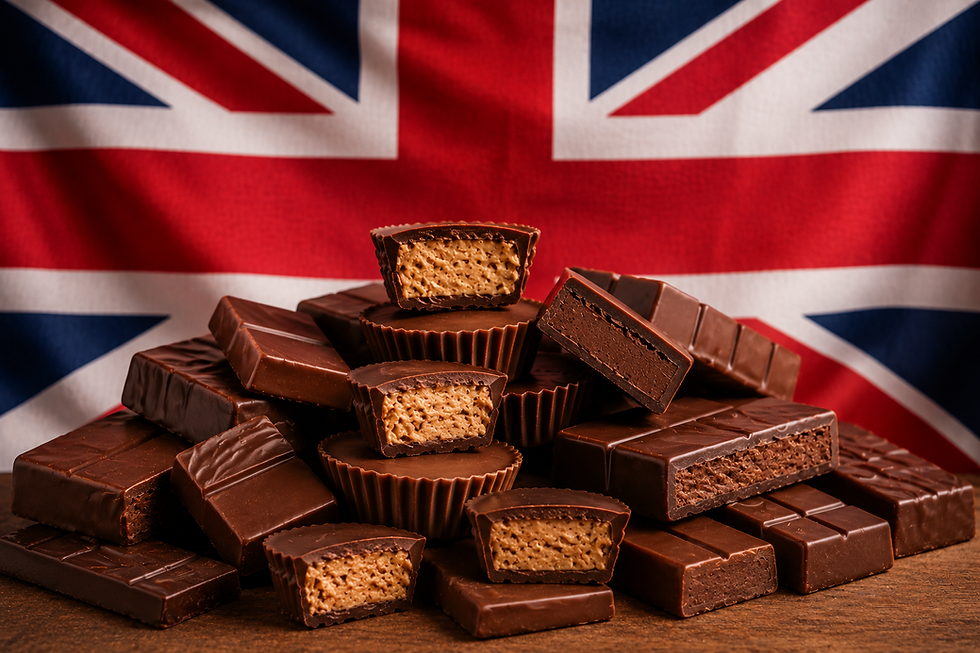
Format flexibility may be the most underappreciated trend. The nut butter cup doesn't have to be cup-shaped. The same filling-in-shell logic works in bar format, in mini-cup format, and increasingly, as an inclusion within other products. Mini nut butter cups folded into ice cream. Mini cups incorporated into trail mix or granola. The format is becoming an ingredient as much as a finished product, and that opens up an entirely different set of commercial conversations.
The nut butter cup has gone from a single iconic product to a platform for innovation across ingredients, function, flavour and format.
If you're thinking about developing a nut butter cup product and want to talk through what's technically achievable, get in touch with James Chocolates. We are the UK nut butter cup experts.


Comments